Understanding the Ramadan Kareem Concept in Flat Illustration
The concept of Ramadan Kareem holds deep cultural and religious significance, especially within the Muslim community. It represents a time of spiritual reflection, self-discipline, and communal unity. As the ninth month of the Islamic lunar calendar, Ramadan is a period when Muslims around the world fast from dawn to sunset, engage in prayer, and seek forgiveness for their sins. The Ramadan Kareem Concept Flat Illustration captures this essence through a visually appealing and versatile design that can be used across various platforms.
What is a Ramadan Kareem Concept Flat Illustration?
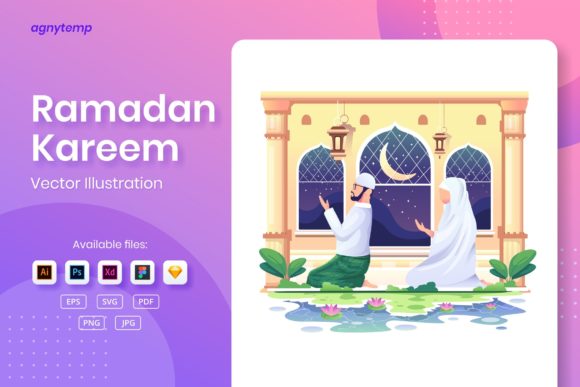
A Flat Illustration is a type of graphic design that uses simple shapes, minimal details, and bold colors to convey an idea or message. When applied to the Ramadan Kareem concept, it creates a visual representation of the values and traditions associated with this holy month. This illustration typically features elements such as a praying Muslim couple at a mosque, symbolic motifs like the crescent moon and stars, and other traditional symbols that reflect the spirit of Ramadan.
The Flat Illustration is not just aesthetically pleasing; it also serves a practical purpose. It is designed to be 100% vector-based, meaning it can be resized and edited without losing quality. This makes it ideal for use in various design projects, including web graphics, mobile applications, landing pages, banners, hero images, infographics, and more.
Key Features of the Ramadan Kareem Concept Illustration
- 100% Vector Design: The illustration is created using vector graphics, ensuring it remains crisp and clear at any size.
- Adobe Illustrator Source File: Users can easily edit and customize the design using Adobe Illustrator.
- Multiple File Formats: The package includes files in Adobe Photoshop (.psd), Adobe XD (.xd), Figma (.fig), EPS10, PDF, SVG, PNG (300 DPI), and JPG (300 DPI) formats, making it compatible with various design software.
- Editable Colors: The illustration allows users to change colors to match their brand or project requirements.
Why Use the Ramadan Kareem Concept Illustration?
The Ramadan Kareem Concept Illustration is more than just a visual asset—it’s a tool that can enhance communication and engagement. Whether you’re creating content for a website, designing promotional materials, or developing educational resources, this illustration offers a professional and culturally relevant way to represent the values of Ramadan.
For businesses, this illustration can be used in marketing campaigns during the holy month, helping to build a stronger connection with Muslim audiences. For educators, it can serve as a teaching aid to explain the significance of Ramadan in a visually engaging manner. For designers, it provides a ready-made, high-quality resource that can be customized to fit specific needs.
Applications in Modern Life
In today's digital age, the use of illustrations has become increasingly important in various fields. The Flat Illustration of the Ramadan Kareem concept can be integrated into multiple aspects of modern life:
- Web Graphics: Websites can use this illustration to create a welcoming and culturally sensitive environment during Ramadan.
- Mobile Web: Mobile applications and websites can incorporate the illustration to provide users with a visually appealing experience.
- Landing Pages: Businesses can use the illustration on landing pages to promote products or services related to Ramadan.
- Banners and Hero Images: The illustration can be used as a focal point in banners and hero images to grab attention and convey the message of Ramadan.
- Infographics: Educational or informational infographics can benefit from the illustration to explain the customs and traditions of Ramadan.
These applications demonstrate how the Flat Illustration can be a valuable asset in both personal and professional settings.
How Does the Illustration Reflect the Spirit of Ramadan?
The Praying Muslim Couple at a Mosque is a central element of the illustration. This image symbolizes the act of worship and the importance of community in Islam. It reflects the values of humility, gratitude, and devotion that are emphasized during Ramadan. By depicting a couple engaged in prayer, the illustration highlights the role of family and togetherness in the observance of this sacred month.
Additionally, the use of flat design ensures that the illustration is accessible and easy to understand. It avoids unnecessary complexity, allowing viewers to focus on the core message of Ramadan—spiritual growth and renewal.
Common Misconceptions About Ramadan
While the Flat Illustration effectively conveys the essence of Ramadan, there are some common misconceptions about the month that should be addressed:
- Myth: Ramadan is only about fasting. While fasting is a key aspect of Ramadan, the month is also about charity, prayer, and self-reflection.
- Myth: Only Muslims observe Ramadan. Although Ramadan is a significant event for Muslims, many non-Muslims also show respect and support for those who are fasting.
- Myth: Ramadan is the same every year. The timing of Ramadan changes each year due to the lunar calendar, which means the dates vary annually.
Understanding these misconceptions helps to foster greater awareness and appreciation for the significance of Ramadan.
Conclusion
The Ramadan Kareem Concept Flat Illustration is a powerful and versatile design that captures the essence of one of the most important months in the Islamic calendar. Its 100% vector-based format, along with its availability in multiple file types, makes it an excellent choice for designers, educators, and businesses looking to incorporate the spirit of Ramadan into their work.
Whether used for educational purposes, marketing campaigns, or creative projects, this illustration serves as a reminder of the values and traditions that define Ramadan. By utilizing such a design, individuals and organizations can not only enhance their visual content but also contribute to a deeper understanding of the cultural and spiritual significance of this holy month.